
How to end a video call with your child without tears
In short. The end of a call goes more smoothly when it's predictable: give a heads-up, say goodbye with the same phrase or song every time, end while your child is still having fun, describe the next call in words they understand, and give them a job — waving or pressing the button. There is almost no research on goodbyes specifically; this is advice from practice.
The call went well: you played peekaboo, your child laughed. You say "okay, bye now" — and a second later there are tears, a cry of "don't go," or a hurt silence. After that you feel less like calling, and sometimes it seems it would have been better not to call at all.
Is there research on saying goodbye to a child over video
Almost none. I didn't find any studies specifically on how to end a video call with a young child. There are three things you can lean on.
- Predictability. The American Academy of Pediatrics (AAP) recommends calling at the same time each day and writes that a predictable routine helps a child (AAP, 2026).
- Short calls are normal. In a survey of parents of children aged 16–30 months, two thirds said their child talked on video for less than 5 minutes (Strouse et al., 2021). This is a conference talk and the data are weak, but the takeaway is simple: there's no need to drag a call out (more in My toddler runs away from video calls).
- Frequency. In a large survey from the same review (855 grandparents, 846 parents), grandparents' closeness with a grandchild and enjoyment of the calls were linked to how often the family calls. The AAP says the same: the more often families call, the more they are likely to enjoy the calls.
Why children cry when a video call ends
There's no exact answer. Here is what practice suggests:
- To a child, the call just breaks off. You say goodbye in words, but what they see is a face that simply vanished. The AAP writes that at around 18–24 months a toddler only begins to understand that a real person is on the screen, and at first may think you're "inside the phone."
- The call ends at its high point. The most fun moment — and suddenly "okay, bye." Your child doesn't understand why that happens. So it's better to wind the call down ahead of time.
- It's unclear when the next one is. "We'll talk soon" means nothing to a two-year-old.
How to say goodbye to a child over video: a five-step ritual
- Give a heads-up. Don't cut the game short — half a minute to a minute before the end, say: "One more peekaboo — and then our goodbye song."
- Say goodbye the same way every time. The same phrase, song or gesture at the end of every call. For example: a last song, a blown kiss, "bye-bye." Don't invent a new goodbye each time — the value is in the repetition.
- End while it's still fun. Don't wait until your child gets tired and fussy. It's better to end on a good note than after five minutes of coaxing them back to the screen.
- Describe the next call in your child's terms. Not "on Thursday" or "tomorrow at seven," but through things they know: "when you get home from daycare," "after your walk." Only promise a time when you will definitely call.
- Give your child a job. Wave, blow a kiss, press the hang-up button together with the adult next to them. When a child ends the call themselves, the end doesn't take them by surprise.
What to say if your child gets upset anyway
Sometimes there will be tears even with a good ritual. Don't drag out the goodbye and don't restart the call — that makes the ending even more confusing. Acknowledge that your child is sad and say when the next call will be:
"You don't want to say goodbye. I love being with you too. Let's say bye now, and tomorrow after daycare we'll see each other again, okay?"
Then your usual goodbye gesture, and hang up.
| Instead of | Try |
|---|---|
| "Okay, I have to go" with no warning | "One more song — and then bye" |
| "We'll talk soon" | "I'll call after breakfast" |
| A new goodbye every time | The same song and a blown kiss |
| "Don't cry, come on" | "You're sad. Me too. I'll call after breakfast" |
| Five rounds of "okay, one more minute" | A short "bye" and hang up |
What the adult next to your child can do
A lot depends on the adult next to your child. They can tell the child in advance: "Grandma is going to sing a song now, and we'll wave," press the button together with the child, and right away suggest the next thing: go eat, go for a walk, get out that special toy. Then the end of the call becomes a step into something familiar. You can send them this section together with the guide for the adult next to your child.
If your child is 1–2 years old, the whole call script, including the goodbye, is in “Video calls with a 1–2 year old: a 5-minute script”.
How laketa works
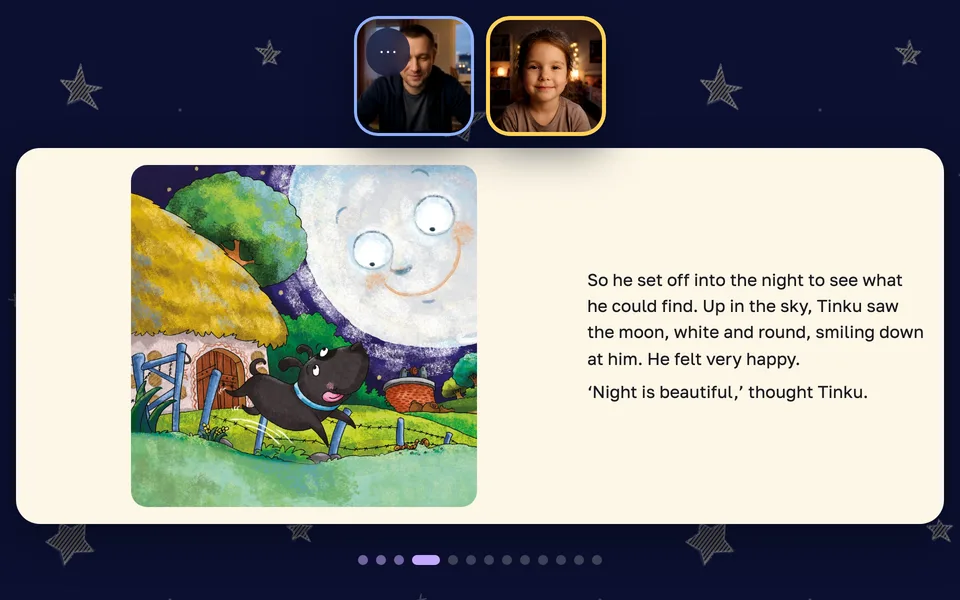
I'm building laketa for parents who call their children from far away. Your child opens one permanent link, no app and no sign-up, and joins a call with no videos, no feed and no ads. You can draw and play simple games together, and at the end launch confetti or balloons — it's easy to make that your "bye" signal.
Sources accessed 2026-10-09. This article is not a substitute for advice from a pediatrician or psychologist.
Frequently asked questions
- Why does my child cry when a video call ends?
- For a young child the call often just breaks off, right at the most fun moment, and it's unclear when the next one will be. There is almost no research on goodbyes specifically; this is an observation from practice.
- How do I say goodbye to my child over video?
- Give a heads-up, say goodbye with the same phrase or song every time, end while it's still fun, and describe the next call in words your child understands, for example "when you get home from daycare."
- What do I say if my child doesn't want to let me go?
- Acknowledge the feeling and say when the next call will be: "You don't want to say goodbye. I love being with you too. Let's say bye now, and tomorrow after daycare we'll see each other again, okay?" Then a short goodbye without dragging it out.
- Should I call back if my child cried after the call?
- From practice: it's better not to restart the call and to let the adult next to your child move straight on to something familiar — a meal, a walk, a toy.