
Video calls with a school-age child: let them read to you
In short. If video calls with your 6–8 year old come down to “How was school? — Fine,” switch roles: let them read to you out loud. A short text they picked themselves; you listen, praise the effort and only give a word after a pause; then the same text once more. The call gets something to do together.
At 6–8, a child no longer runs away from the screen like a toddler, but talking “just because” is boring. Questions about school, homework and grades they already hear every day from every adult. Reading aloud gives the call what it's missing: a shared task for a few minutes in which the child is in charge.
Your child is bored talking on video calls: what to do
“How was school?” asks a child to recall the day, pick the main thing and tell it, all at once. After a day of lessons that's work, and it's easier to answer in one word. This is an observation from practice, not a research finding.
Two things help: specific questions instead of general ones (a collection is in “What to say to your child on a video call”) and a shared activity the conversation can grow around. Reading aloud is one of those activities, and it has been studied well.
What research says about reading aloud with an adult
In 2000, the US National Reading Panel reviewed studies of “guided repeated oral reading”: a child reads a text aloud several times while someone listens and helps. The panel's conclusion: these practices had a “consistent, and positive impact” on word recognition, fluency and comprehension across grade levels (National Reading Panel, 2000).
Three more things from the same report:
- the helpers could be teachers, researchers, other students — and parents;
- there were many variants — repeated reading, reading together, assisted reading — and all were linked to a positive effect;
- teachers, parents and other helpers in these studies needed no more than 1–4 hours of preparation, and special materials were usually not needed.
What the report doesn't say. It says nothing about video calls: these are studies of reading next to an adult or another student, not through a screen. They tested regular sessions over weeks, not one-off reading. So the honest way to put it: the “child reads, adult listens and helps” format is well studied, and a call is a convenient way to set it up. There's no evidence that it works the same way over video.
How to set up reading over a video call
What follows is advice from practice, not research findings.
- Your child picks the text. A favorite book, a poem, a comic, a magazine page. Interest matters more than “usefulness.”
- Keep it short. A page, a poem, a short chapter. Better to finish a small text than abandon a big one.
- Both of you have the text. Your child reads from their book, and you have the same one or a photo of the page sent by the adult next to them. If you're calling from a computer, you can show the text with screen sharing, and your child reads it from your screen.
- Give a word only after a pause. Your child stumbles — wait a few seconds: often they'll manage on their own. If not, say the word and move on, without going over the mistake.
- Praise effort, not speed. “You worked out that long word yourself,” “I loved how you read in the wolf's voice.”
- Second time — the same text. “Read it again, now you know what's there.” The second time your child already knows the hard spots and enjoys hearing how much easier it got.
- 5–10 minutes. That's a guide, not a rule. Tired or bored — stop, even if you haven't finished.
What to avoid
- Correcting every word right away — reading turns into a chain of stops.
- Turning the call into a homework check. If school reading has to get done, arrange that with the adult next to your child, and leave the choice on your call to your child.
- Comparing with classmates or with “how you used to read.”
- Timing them. Speed is not the goal here.
This is also from practice, not research.
If your child is just learning to read
Take turns: you read a sentence, they read a sentence. Or you read, and your child reads only the repeated line or the words they already know. If they can't read yet at all, the advice in “How to read to your child over a video call” will suit you.
If reading is very hard for your child and it upsets them, that's a question for the teacher or a speech therapist, not for the call.
After reading: make up what happens next
Once the text is read, you can play with it: “What happened next?” Take turns adding one sentence each until the story reaches an end. Or let your child draw the hero while you guess who it is. This is a game from practice, not a proven way to teach anything: it's there so the call ends on a fun note.
How laketa works
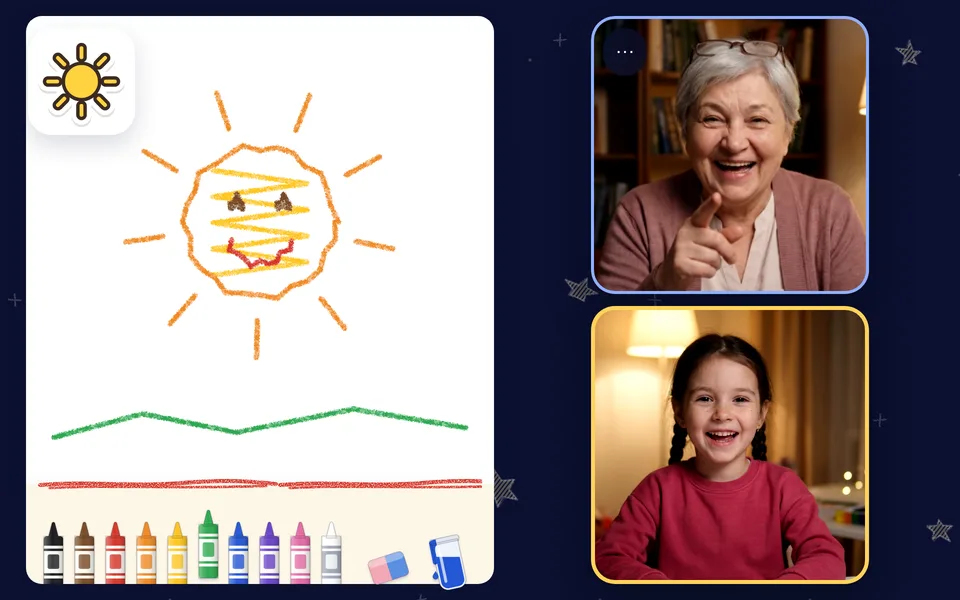
I'm building laketa for parents who call their children from far away. A school-age child reads to you from their own book, and from a computer you can show them a text with screen sharing. For little ones, laketa has a Bedtime book: a picture book on both screens. After reading, you can play Checkers or Guess the drawing — draw the hero of the story. Your child joins through one link, with no app and no sign-up.
Sources accessed 2026-10-09. This article is not a substitute for advice from a pediatrician or psychologist.
Frequently asked questions
- What can I talk about with a school-age child on a video call if they just say “fine”?
- Instead of general questions, give the call a shared activity. For example, ask your child to read you a short text they picked themselves.
- Is it good for a child to read aloud to an adult?
- The US National Reading Panel (2000) found that repeated oral reading with an adult listening and helping had a consistent, positive effect on word recognition, fluency and comprehension. Parents could be the helpers. These studies did not test a video call version.
- How do I help my child if they get stuck on a word?
- Wait a few seconds: often they will manage on their own. If not, say the word and keep reading, without going over the mistake.
- How many minutes should we read over video?
- A rough guide is 5–10 minutes, but it's not a rule. Stop when your child is tired or bored.
- How do we read over video if only my child has the book?
- Ask the adult next to your child to send a photo of the page, or, if you are calling from a computer, show your child the text with screen sharing.